 Local Hair Color
What to tell your colorist, and what to bring to a hair color consultation
A color consultation goes best when you and your colorist are picturing the same thing. That’s harder than it sounds. “A little warmer” means something different to everyone, and a photo of someone else can point you both in the wrong direction. Here’s what to bring, what to say, and what to leave to the person holding the brush.
The short versionBring two or three previews of the color on your own photo, plus one you know you don’t want. Describe the change with simple words like warmer or cooler, lighter or deeper, subtle or obvious. Share your full hair history, your budget, and how often you can come back. Then let your colorist tell you what’s achievable and how many visits it may take.
Why other people’s photos can mislead
Inspiration photos are wonderful for mood, and most colorists are happy to see them. The trouble is that the hair in them usually started somewhere very different from yours. The person may have had lighter or darker hair to begin with, a different color history, a different texture, and a different skin tone next to the color.
Then there’s the photo itself. Studio lighting, golden-hour sun, phone processing, and filters all change how a color reads. A shade that looks soft caramel in one picture can be quite orange in daylight. When you point at a stranger’s hair, you and your colorist may each be reacting to different parts of the picture.
A preview on your own photo removes a lot of that guesswork. Your face, your usual lighting, and your hair’s shape stay the same, so the only thing that changes is the color direction.
If you’re new to trying colors on a photo, our step-by-step guide on how to try on hair color from a photo on iPhone walks through the whole process, from picking a photo to fixing edges.
Make two or three previews on your own photo
Start with a clear, evenly lit photo of yourself where your hair is easy to see. Our guide to choosing a photo for a better hair color preview covers what works well. Then try a few directions and narrow them down to the two or three you keep coming back to.
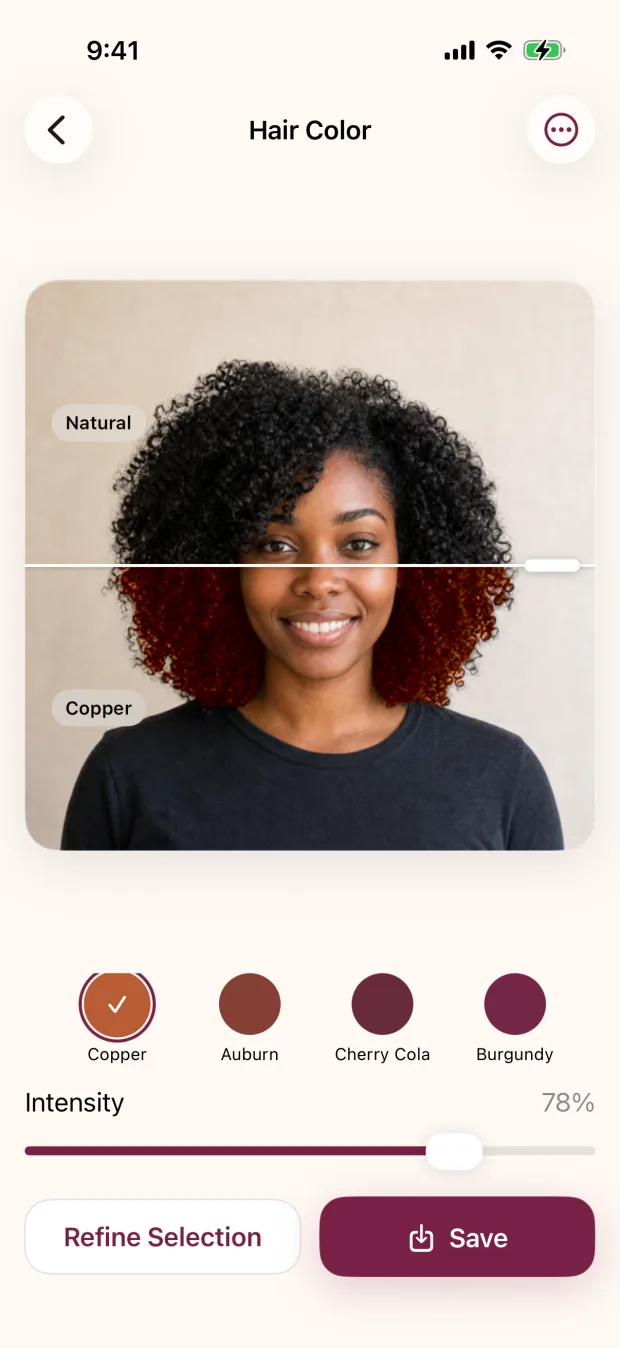
In Local Hair Color, you can try sixteen curated shades or pick your own with Custom, then use the intensity slider to decide how strong the change should look. Lower intensity lets more of your own color show through, which can help you show a colorist the difference between “a hint of copper” and “properly copper.” Tap Natural to flip back to your original, so you can see exactly how big a change you’re asking for.
Add one “not this” preview
This is the most underrated thing you can bring. A preview of the direction you want to avoid tells your colorist as much as your favorite. Maybe you want red but not purple-red, or lighter but nothing that looks yellow. Showing the line you don’t want to cross gives the conversation a clear edge.
Label your saved previews in your head, or in a note, as “yes,” “maybe,” and “no.” It keeps the chat focused when you’re scrolling your camera roll in the chair.
What to tell your colorist, in plain words
You don’t need salon vocabulary. A few simple pairs do most of the work, and your colorist can translate them into their own terms:
- Warmer or cooler. Warmer leans golden, copper, or red. Cooler leans ashy, beige, or silvery.
- Lighter or deeper. Say whether you want to go up, down, or stay about where you are.
- Subtle or obvious. Should friends notice right away, or only think you look well rested?
- Low or higher upkeep. Be honest about how much regrowth and fading you’re happy to live with.
If you’re unsure which words fit, point at your previews and say what you like about each one. “I like how this one looks brighter around my face, but I don’t want it this red” is perfectly useful.
Bring your hair history
Your colorist can see your hair today, but not everything that has happened to it. Past color can stay in the lengths for a long time, even when you can’t see it, and it can change how new color behaves. Be as complete as you can, even about the box dye from a few years ago you’d rather forget. Nobody is judging.
It also helps to be upfront about your life outside the salon: how often you can realistically come back, what you want to spend, and how much visible regrowth bothers you. Those answers shape the plan as much as the color itself.
What to bring to a hair color consultation
- Two or three previews of the color on your own photo
- One “not this” preview
- Any box dye you’ve used, and roughly when
- Past lightening or bleach, highlights, or salon color
- Henna or other plant dyes, and any other chemical treatments
- How often you use heat styling
- How often you can come back for appointments
- Your budget for the first visit and for upkeep
- How much regrowth you’re comfortable seeing
Let your colorist decide what’s achievable
A preview shows a color direction on a photo. It doesn’t know your starting color underneath, what your past color will do, or how your hair will handle the change. Your colorist does, or can find out with a test. Treat your previews as the start of the conversation, not a specification.
Good questions to ask include: Can my hair get to something like this? Would it take more than one visit? What would it look like between visits? How will it fade, and how often would I need to come back? If a colorist suggests a gentler first step, that’s often a sign they’re looking after your hair.
If your heart is set on a big change, such as going blonde from darker hair, expect the answer to include a plan rather than a single appointment.
Save clean copies you can show on your phone
When you save a preview in Local Hair Color, the app writes a new photo and leaves your original untouched. The saved copy leaves out your location, the original filename, the camera serial, and other unrelated photo details, which is nice if you’re texting it to a salon ahead of time.
Save your original next to the previews, too, or just be ready to tap Natural. Seeing where you’re starting and where you’d like to end up, side by side, is exactly what a colorist wants. You can read more about the editor on the features page.
Book a consultation first if you can.
Many salons offer a short chat before a big color change. It’s the perfect moment to show your previews and hair history without the pressure of already sitting in the chair.
What a preview can’t tell anyone
A preview colors the hair it finds in your photo with one tone at the strength you choose. It doesn’t place highlights, balayage, or dimension, and it can’t predict what dye or lightener will do on your hair. Your real result depends on your starting color, past color and treatments, hair condition, products, and technique. That’s your colorist’s expertise, and the preview simply helps you both aim at the same picture.
Quick questions
Should I bring pictures to a hair color appointment?
Yes, most colorists find pictures helpful. Previews on your own photo are especially useful, because they show the direction on your face and hair shape rather than someone else’s. Bring one you don’t like, too.
Do I really need to mention old box dye?
Please do. Past color can stay in your hair for a long time and can affect how new color turns out. Your colorist would much rather know before they start.
How do I describe the hair color I want?
Use simple pairs: warmer or cooler, lighter or deeper, subtle or obvious, low or higher upkeep. Then point at what you like and dislike in your previews. Your colorist will translate that into a plan.
Will my hair look exactly like my preview?
Not necessarily. A preview shows a direction on a photo. What your hair can actually reach, and how many visits it might take, is a question for your colorist.